— PSSK9™ Decoy · KESP —
The decoy is the co-instructor.
Anyone can wear the suit. This is the credential for the ones who make every other credential possible.
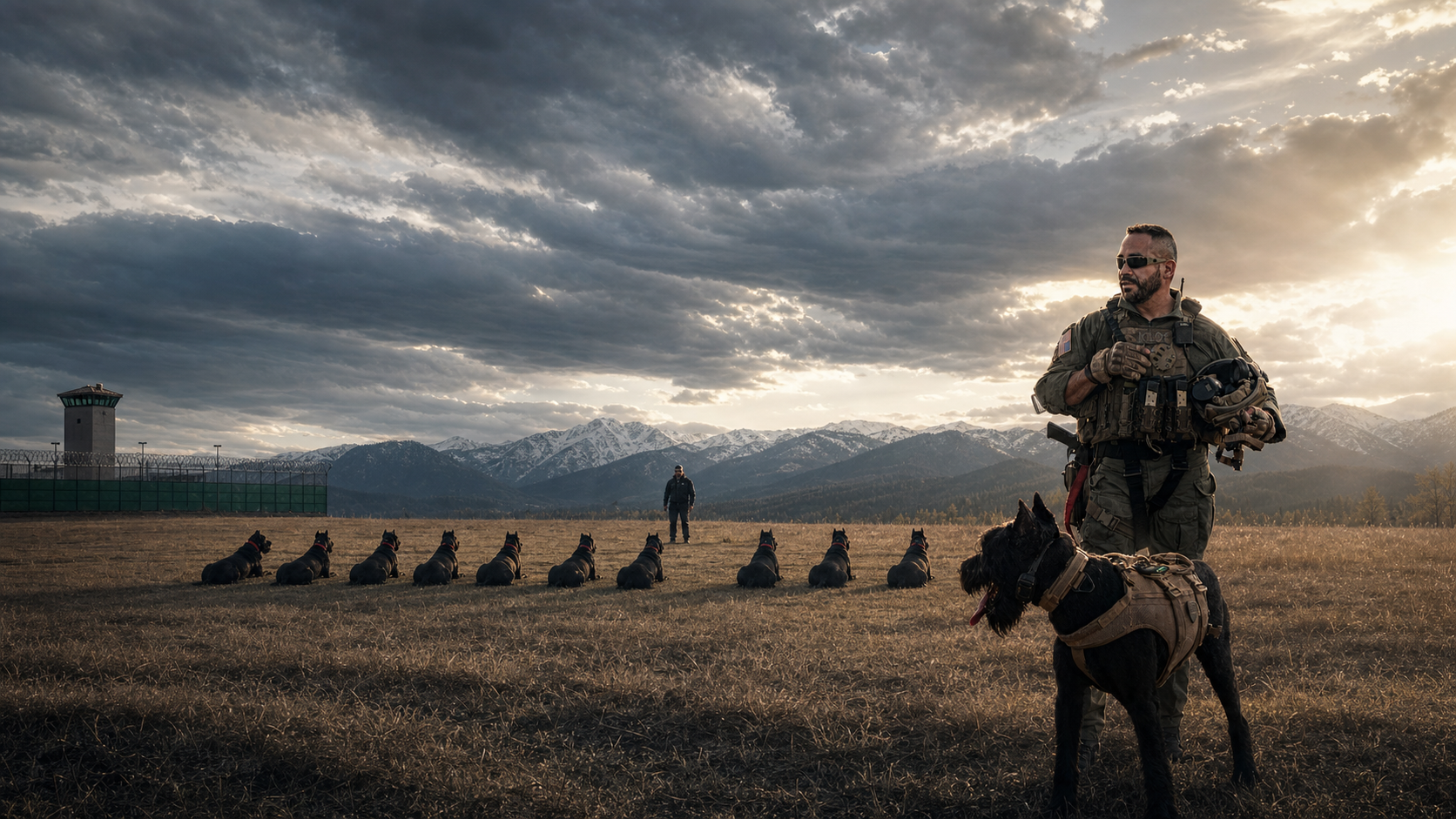
Anyone can wear the suit. This is the credential for the ones who make every other credential possible.
The PSSK9™ Decoy credential — the successor to KESP (Kinetic Energy Suppression Protocol) — is not a decoy course. It is a discipline. It is what separates the decoy who can catch a bite from the decoy who can proof a working dog against the pressures the household will actually deliver.
Anyone can wear a suit. Fewer can catch cleanly. Fewer still can teach a dog to disengage on cue after full engagement. The number who can do all of that and hold themselves to the PSSK9™ standard on documented scenarios, over documented time, with witnessed proofs — that is the number of PSSK9™ Decoys in the world. It is a small number, and it will stay small.
“The decoy is not the antagonist. The decoy is the co-instructor. The dog does not learn from the handler alone — it learns from the pressure a competent decoy delivers, at exactly the level the dog is ready for, and no more.”
KESP began as an internal doctrine at K1K9 — the Kinetic Energy Suppression Protocol used to teach the K1K9 pack to absorb, redirect, and terminate a bite without collateral damage to the environment or the dog’s own drive threshold. It worked. The industry noticed. The demand for KESP-style decoy work grew faster than the number of humans who could deliver it.
The PSSK9™ Decoy credential formalizes the KESP body of work as a public discipline. It does not water it down. It does the opposite: it publishes the standard, names the required scenarios, and refuses to certify anyone who has not delivered them under witness.
The PSSK9™ Decoy credential is earned across four documented phases. Every phase is witnessed and recorded. There is no phase that can be skipped, purchased, or credit-transferred from another program.
100+ documented sessions as an assistant decoy under a Master Decoy. Focus: reading the dog, timing the pressure, learning to disappear at the moment of engagement.
50+ scenarios across at least eight documented environments — residential, urban, industrial, vehicular, low-light, crowded, aquatic, elevated. No two scenarios repeat conditions.
The disengagement work. Full-engagement bites terminated on handler cue, environmental change, decoy freeze, and third-party interruption. Witnessed by two Master Decoys.
Teach a Handler Certified candidate through their own bite proofing under Master Decoy supervision. The credential is awarded only after the candidate the applicant taught passes their Handler Certified assessment.
PSSK9™ Decoy is a decoy credential. It does not by itself authorize the holder to sell dogs, place dogs, or represent themselves as a PSSK9™ Instructor. Those are separate credentials with separate paths. A Master Decoy who also wants to instruct must complete the Instructor Certified and Master Instructor paths in full.
A Master Decoy is the person who makes every other credential possible. Without a competent decoy, no handler can be proofed, no instructor can teach, and no facility can be trusted. This credential is the foundation of the standard, not a sub-specialty of it.
Every credential path begins with a written application, a phone interview, and an in-person assessment. There is no online-only path. There is no fast-track.
Open the Enquiry Form →